AMerican board of first responder behavioral healthcare (frbh)
OPHP FRAMEWORK
Occupational Psychological Hazard Protection (OPHP)
Occupational Psychological Hazard Protection (OPHP) is the organizational protection provided following qualifying Occupational Psychological Hazard Exposure.
It applies established occupational safety principles—defined criteria, assigned responsibility, documented processes, accountability, evaluation, and continual improvement—to what an organization does when qualifying exposure occurs.
The principle is not new. The standardized application is.
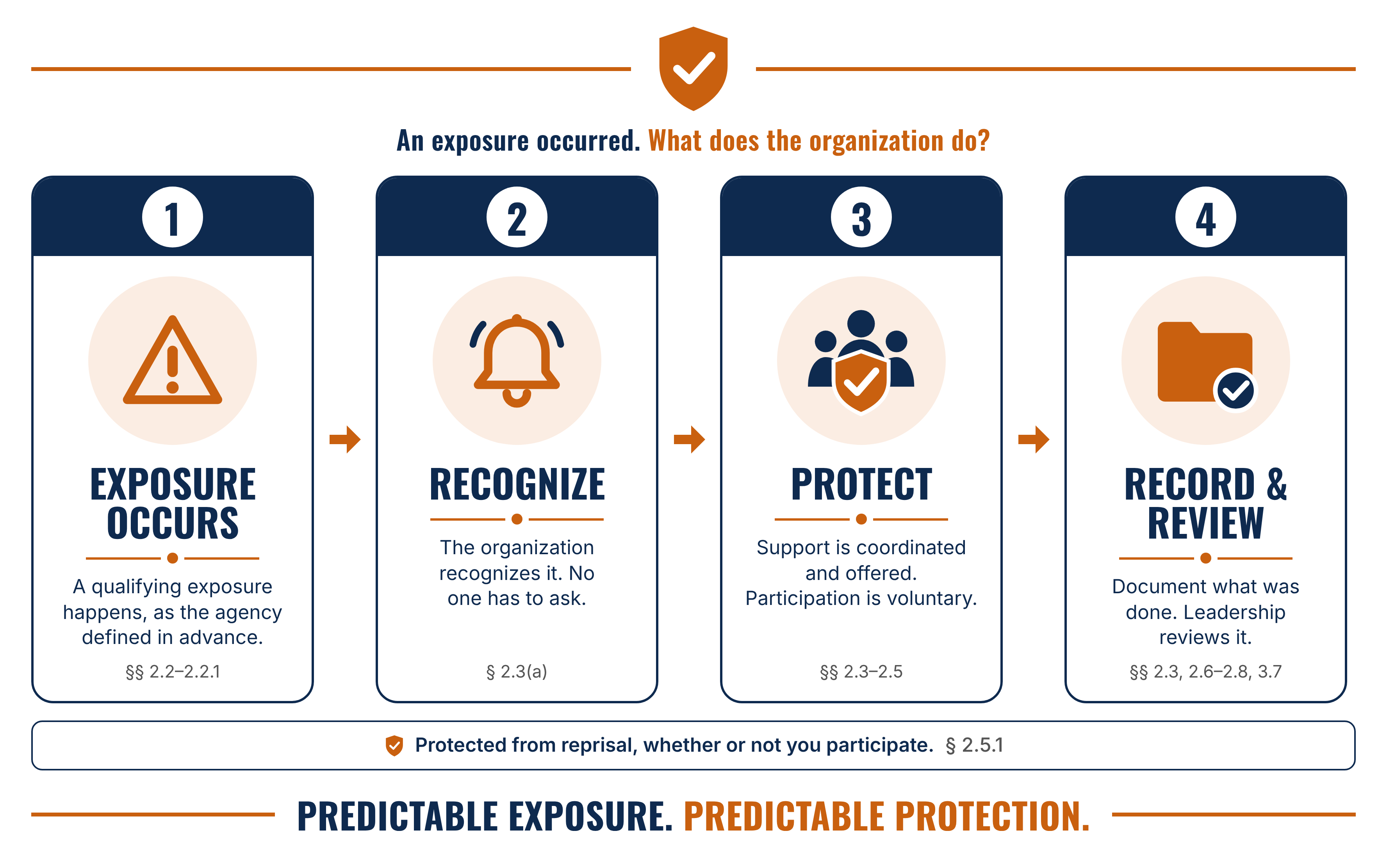
OPHP establishes a consistent organizational framework for recognizing when qualifying exposure has occurred, activating organizational protection, assigning responsibility, coordinating existing capabilities, documenting organizational action, and evaluating whether the system operates as intended.
The framework is established in the FRBH National Standard for Occupational Psychological Hazard Protection.
READ THE NATIONAL STANDARD →
Occupational Psychological Hazard Exposure (OPHE)
Occupational Psychological Hazard Exposure (OPHE) is exposure to occupational events, incidents, or operational experiences encountered in the course of duty that have foreseeable potential for psychological impact.
Within public safety, qualifying exposures may include line-of-duty deaths, mass-casualty events, pediatric fatalities, serious injury or death to personnel, and other operational exposures meeting the criteria established by the Standard.
OPHE describes an occupational exposure. It does not describe an injury, diagnosis, impairment, or individual psychological response.
Occupational Safety Principles
The premise is straightforward: predictable occupational exposure should be met with predictable organizational protection.
Occupational safety systems do not have to wait for individual harm before establishing organizational responsibilities. Criteria, responsibilities, procedures, documentation, oversight, and evaluation can be defined in advance.
OPHP applies that organizational discipline to what happens following qualifying Occupational Psychological Hazard Exposure.
Traditional workforce support often becomes available when personnel seek or accept assistance. OPHP addresses a different organizational question:
What does the organization do because a qualifying occupational exposure occurred?
Under OPHP, qualifying exposure activates the organizational process. Organizational responsibility does not depend on symptoms, diagnosis, disclosure, or help-seeking.
How the Framework Operates
Qualifying exposure criteria.
The organization establishes documented criteria for determining when Occupational Psychological Hazard Exposure qualifies for organizational protection under the Standard.
Exposure-triggered activation.
When qualifying exposure is recognized, the organization's defined protection process activates. No disclosure of a psychological condition is required.
Governance and coordination.
Responsibility is assigned, organizational action is documented, and existing workforce protection capabilities are coordinated rather than replaced.
Workforce autonomy.
Organizational protection does not require individual participation in support services. Personnel retain the choice whether to participate in EAP, peer support, behavioral health, chaplaincy, or other offered resources, except where otherwise required by law or agreement.
Evaluation and continual improvement.
Leadership evaluates the system at defined intervals and uses organizational learning to strengthen protection over time. Organizations retain flexibility in how they satisfy the requirements of the Standard within their mission, workforce, and operating environment.
What OPHP Measures
OPHP evaluates the organizational protection process, not the psychological condition of individual personnel.
Organizational conformity considers whether qualifying exposure can be recognized, the defined organizational process activates when it occurs, responsibilities are clear, workforce protection capabilities are coordinated, required organizational actions are documented, and the system is evaluated and improved.
OPHP establishes no clinical standard, makes no fitness-for-duty determination, and assesses no individual's psychological condition.
Relationship to Behavioral Health
OPHP complements existing behavioral health and workforce protection capabilities. It does not replace EAP, peer support, behavioral health services, chaplaincy, CISM, occupational health, or other existing resources.
Those capabilities continue to provide their respective forms of support and expertise. OPHP establishes organizational structure around them—defining when organizational protection activates, assigning responsibility, coordinating existing capabilities, documenting organizational action, and maintaining accountability for whether the process operates as intended.
The exposure triggers the organizational process. The individual retains the choice whether to participate in offered support.
Where OPHP Begins
The FRBH National Standard begins at the point of exposure.
It does not assess hazards or work environments, determine how work should be designed or staffed, evaluate assignment practices, or establish measures intended to prevent or reduce occupational exposure.
OPHP addresses the organizational responsibility that follows qualifying exposure: recognizing that the exposure occurred, activating a defined protection process, coordinating existing capabilities, protecting workforce autonomy, documenting organizational action, and evaluating performance.
Foundational Principle
Many occupational psychological exposures are foreseeable conditions of public safety work.
OPHP establishes a standardized organizational framework so that when qualifying exposure occurs, the organization's response does not depend on whether an individual develops symptoms, receives a diagnosis, makes a disclosure, or asks for help.
Predictable exposure should be met with predictable organizational protection.